

NEWS: [See all News]
 WALL - IN MEMORY OF: [See all Messages]
Every time when I go to Normandy I pay my respect to Henry Herman Wolters and send the photo's from his grave to his Family.
Honored by Herman Wolters
[2024-02-29 20:28:14]
Samuel Clinton Palmer
Service ID: 35803938
From: Tallega, Lee County, Ky
Birth Date November 28, 1924
Casualty Date June 6, 1944
Army
Corporal
HQ Company, 2nd Battalion, 116 Infantry Regiment, 29th Infantry Division
Casualty Type KIA - Kill in Action
Location: Omaha Beach, Normandy, France
Honored by Jeffrey Palmer
[2023-12-25 14:40:54]

Raymond S. HOBACK - 29th Division.
Bedford Boys Fallen - Raymond Samuel HOBACK never had a chance to reach 100 years old today. Instead, he sacrified his life for our freedom... Raymond may have made it out of his landing craft, but he never made it to shore. Others recall seeing his body in the water. Bedford also failed to make in on the beach. He was killed by an exploding 88mm shell. Their time in the battle could be measured in minutes... [American D-Day facebook] Read more...
[Posted: 2020-01-21 22:40:05]
Bedford Boys Fallen - Raymond Samuel HOBACK never had a chance to reach 100 years old today. Instead, he sacrified his life for our freedom... Raymond may have made it out of his landing craft, but he never made it to shore. Others recall seeing his body in the water. Bedford also failed to make in on the beach. He was killed by an exploding 88mm shell. Their time in the battle could be measured in minutes... [American D-Day facebook] Read more...
[Posted: 2020-01-21 22:40:05]
RIP - Robert GIGUERE - Navy.
It is with heavy heart we learn the passing of Mr. Robert GIGUERE, a veteran of D-Day (Normandy)... He was 93... Four days earlier, Giguere rode across the choppy English Channel toward the Normandy coast with the Sixth Naval Beach Battalion. When his carrier grounded on the beach, a Teller mine detonated from beneath and tore through the ship's hull, Killing several soldiers below deck... [American D-Day facebook] Read more...
[Posted: 2020-01-21 22:58:23]
It is with heavy heart we learn the passing of Mr. Robert GIGUERE, a veteran of D-Day (Normandy)... He was 93... Four days earlier, Giguere rode across the choppy English Channel toward the Normandy coast with the Sixth Naval Beach Battalion. When his carrier grounded on the beach, a Teller mine detonated from beneath and tore through the ship's hull, Killing several soldiers below deck... [American D-Day facebook] Read more...
[Posted: 2020-01-21 22:58:23]
1 - 2 / 25 news  |
 |
WOLTERS HENRY H 1ST INFANTRY DIVISION |
Honored by Herman Wolters
[2024-02-29 20:28:14]
 |
PALMER SAMUEL C 29TH INFANTRY DIVISION |
Honored by Jeffrey Palmer
[2023-12-25 14:40:54]
| 1 - 2 / 135 messages |

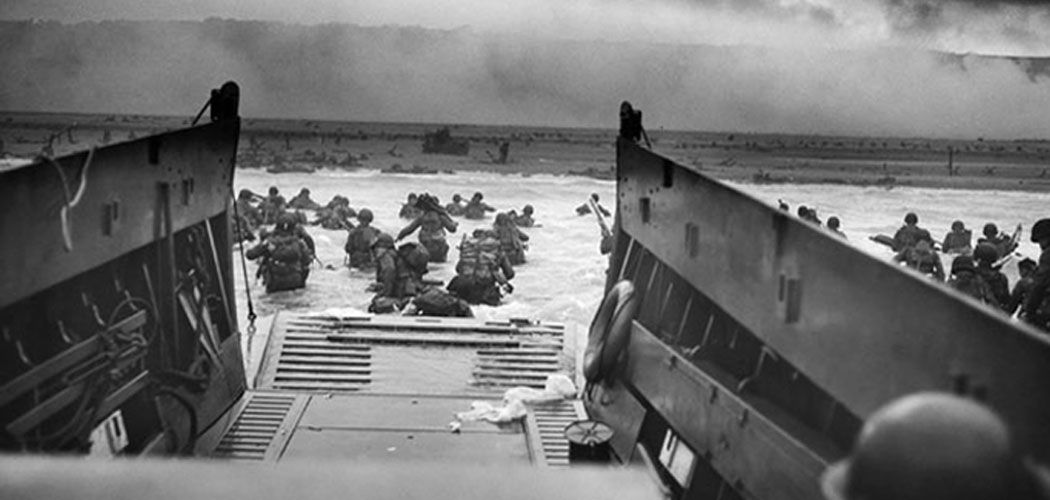
THEY DIED ON OMAHA BEACH 6 JUNE 1944...
Let us remember those young soldiers who changed the history with their sacrifice. Let us commit ourselves to remembering their sacrifice by cherishing the freedom they bought for new generations.
To remember those heroes...
THEY WERE ON OMAHA BEACH...
24583 veterans registered
Ex: McDONALD HAROLD W


NORMANDY AMERICAN CEMETERY...
The Normandy American Cemetery is located on the site of the temporary American St.-Laurent Cemetery, established by the U.S. First Army on June 8, 1944.
To discover Normandy American Cemetery...
TESTIMONIES...
To discover the testimony of those heroes who were on Omaha Beach
To discover those testimonies... 



VISITOR CENTER...
Visitor Center is the starting point to visit Omaha Beach area. You will find all information there to discover Omaha Beach.
To discover Visitor Center...